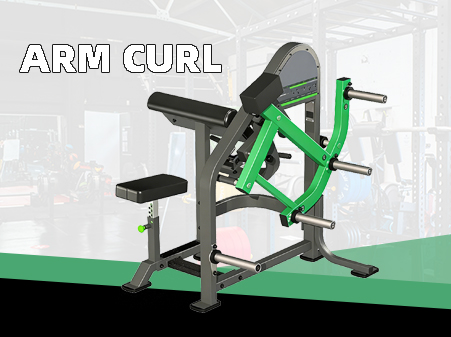
The arm curl machine is a specialized fitness equipment designed to target and strengthen the biceps muscles.It provides stable support and controlled resistance, helping users perform effective arm curling exercises with proper form.
Primary Muscles Worked: The Stars of the Exercise
The arm curl machine is designed to focus primarily on the muscles that drive elbow flexion—the bending motion that brings your forearm toward your shoulder. These are the muscles that give your arms their shape and strength, and they are activated most intensely during each repetition.
1. Biceps Brachii
The biceps brachii, commonly known as the biceps, is the primary muscle targeted by the arm curl machine. This two-headed muscle (long head and short head) runs along the front of the upper arm, originating from the shoulder blade and attaching to the radius bone in the forearm. Its main function is elbow flexion, and it also assists in forearm supination (turning your palms upward). When you curl the handles of the machine upward, the biceps brachii contracts forcefully, pulling your forearm toward your shoulder and creating the signature “bicep peak” that many lifters aim to develop. The machine’s fixed path ensures that the biceps remain engaged throughout the entire movement, without relying on momentum to lift the weight.
Secondary Muscles Worked: Supporting the Movement
While the biceps take center stage, several secondary muscles (also called synergist muscles) assist in the movement, helping to stabilize the arm and enhance the effectiveness of the exercise. These muscles are not the primary focus but play a crucial role in maintaining proper form and supporting the biceps.
1. Brachialis
The brachialis is a thick muscle located beneath the biceps brachii, running from the humerus (upper arm bone) to the ulna (forearm bone). Unlike the biceps, it is not affected by forearm rotation, meaning it assists in elbow flexion regardless of whether your palms are up, down, or neutral. This muscle is key for adding thickness to the upper arm—while the biceps create the “peak,” the brachialis contributes to overall arm width. The arm curl machine activates the brachialis throughout the movement, especially when using a neutral or slightly pronated grip (palms facing inward or downward).
2. Brachioradialis
The brachioradialis is a forearm muscle that runs along the thumb side of the forearm, from the humerus to the radius. Its primary function is to assist in elbow flexion, and it is most active when the forearm is in a neutral position (palms facing each other), such as during hammer curls. While the standard arm curl machine (with a supinated grip) targets the biceps more intensely, the brachioradialis still engages to stabilize the forearm and support the curling motion. For those looking to emphasize this muscle, adjusting the grip to neutral (if the machine allows) can increase brachioradialis activation.
3. Forearm Flexors
The forearm flexors—including the flexor carpi radialis, flexor carpi ulnaris, and flexor digitorum—are small muscles in the forearm that assist in wrist flexion and grip strength. During arm curls, these muscles engage isometrically (without movement) to maintain a firm grip on the machine’s handles and stabilize the wrist. This is especially important for preventing wrist strain and ensuring that the force from the exercise is transferred to the biceps and other target muscles, rather than being wasted on unstable wrists.
Stabilizer Muscles: Maintaining Form and Stability
Stabilizer muscles do not directly contribute to the curling motion but are essential for keeping your body in proper alignment and preventing injury. These muscles engage minimally but play a critical role in ensuring the exercise is performed safely and effectively.
1. Shoulder Stabilizers
Muscles in the shoulder, such as the anterior deltoids (front of the shoulders) and rotator cuff muscles, act as stabilizers during arm curls. They keep the upper arm (humerus) stable against the body, preventing it from swinging or lifting away from the torso. This stability ensures that the biceps, not the shoulders, are doing the work—and it reduces the risk of shoulder strain or injury.
2. Core Muscles
Your core muscles—including the rectus abdominis and obliques—engage isometrically to keep your torso upright and stable during the exercise. This prevents you from leaning back or using your core to generate momentum, which would take focus away from the arm muscles. Maintaining a tight core also helps with overall posture, ensuring that the movement is controlled and effective.
How to Maximize Muscle Engagement on the Arm Curl Machine
To ensure you’re targeting the right muscles and getting the most out of your workout, follow these tips:
-
Adjust the machine properly: Set the seat height so that your elbows align with the machine’s pivot point, and your upper arms rest comfortably against the pads. This keeps the biceps isolated and prevents shoulder involvement.
-
Use a controlled motion: Avoid swinging or rushing the movement. Curl the handles upward slowly (2–3 seconds), squeeze the biceps at the top for 1 second, then lower the weight slowly (2–3 seconds) to maximize muscle contraction and stretch.
-
Maintain a firm grip: Keep your wrists straight and rigid to engage the forearm flexors and prevent wrist strain. A loose grip can reduce muscle engagement and increase injury risk.
-
Choose the right weight: Use a weight that challenges you but allows you to complete 8–12 repetitions with proper form. Using too much weight can lead to poor form and shift focus away from the target muscles.
Final Thoughts
The arm curl machine is a highly effective tool for targeting the biceps brachii, along with supporting muscles like the brachialis, brachioradialis, and forearm flexors. By isolating these muscles and reducing momentum, it allows for focused, safe training—making it ideal for beginners, advanced lifters, and anyone looking to build arm strength and definition. Understanding which muscles are worked and how to use the machine properly will help you tailor your workouts to your goals, whether you’re aiming for bigger biceps, thicker arms, or improved grip strength.

