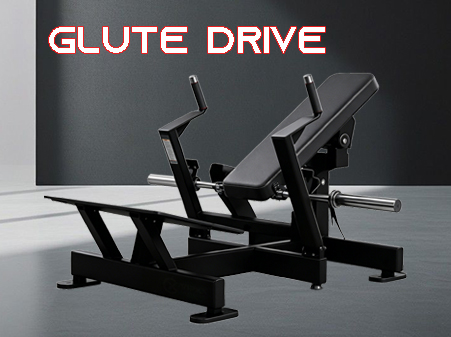
The glute drive machine is a professional lower-body fitness equipment. It effectively isolates and activates the glute muscles through standard hip thrust movements to enhance hip strength and muscle definition. Meanwhile, its ergonomic supportive structure reduces lumbar pressure and improves overall hip joint stability for safer long-term training.
The Core Functions of the Glute Drive: Precision, Stability, and Performance
The Glute Drive streamlines glute training by fixing the flaws of traditional exercises like barbell hip thrusts, which demand balance and setup time. It creates a controlled, ergonomic environment to maximize glute activation and minimize injury, making it accessible to all fitness levels.
At its core, it enables guided hip extension—the key glute-activating motion—eliminating the need to stabilize a barbell. Most models have adjustable thigh pads, a non-slip footplate, and an ergonomic hip roller to fit different body types and ensure proper movement. Its sturdy build offers stability even under heavy loads, and its compact design suits commercial and home gyms.
A key function is supporting progressive overload, critical for muscle growth. Many models have plate-loading systems or adjustable weight stacks, letting users increase resistance gradually. Some include band-loading pegs for smooth, low-back-friendly activation, and the pivoting back pad follows natural movement to support the lower back.
For convenience, it often features easy-adjust settings, allowing quick transitions between sets—perfect for busy gym-goers focused on their workout.
Targeted Muscle Groups: Beyond the Glutes—Building a Stronger Posterior Chain
While the Glute Drive isolates glutes, it also engages secondary and stabilizing muscles, delivering a holistic lower-body workout. Here’s a breakdown of key muscles activated:
Primary Muscle Group: Gluteal Complex
The gluteal complex—gluteus maximus, medius, and minimus—is the main focus, each serving unique movement and stability roles.
-
Gluteus Maximus: The body’s largest muscle, it drives hip extension (the exercise’s upward thrust) and powers movements like sprinting and lifting. The Glute Drive isolates it, reducing hamstring/quad compensation and maximizing activation through controlled motion.
-
Gluteus Medius: Located on the hip side, it stabilizes the pelvis and prevents tilting during training. Strengthening it boosts hip stability, reduces injury risk, and enhances glute symmetry.
-
Gluteus Minimus: The smallest glute muscle, it assists in hip abduction and internal rotation, working with other glutes to stabilize the hip joint for smooth movement.
Secondary Muscle Groups: Supporting Strength and Stability
Several secondary muscles enhance lower-body strength and stability alongside the glutes:
-
Hamstrings: Act as stabilizers, aiding hip extension and knee flexion during the lowering phase without overshadowing the glutes.
-
Quadriceps: Play a minor role stabilizing the knees; proper foot placement minimizes their involvement to keep focus on glutes.
-
Core Muscles: The lower back, obliques, and transverse abdominis stabilize the torso, preventing lower-back strain and directing force to the glutes.
-
Hip Stabilizers: Small muscles like the piriformis stabilize the hip joint, reducing injury risk and improving movement control.
Why the Glute Drive Outperforms Traditional Glute Exercises
The Glute Drive outshines free-weight exercises by isolating glutes while eliminating common barriers. Barbell hip thrusts often cause discomfort or poor form (e.g., lower-back overarching), but the Glute Drive’s ergonomic design provides stable, guided movement for maximum activation without strain.
Accessible to all levels, beginners start with light resistance while advanced athletes add heavy loads. It’s also ideal for injury recovery, offering controlled, low-impact glute training.
Conclusion: Elevate Your Lower-Body Training with the Glute Drive
The Glute Drive unlocks glute potential and builds a stronger posterior chain. Its precision design, glute focus, and support for progressive overload make it a valuable addition to any strength routine, targeting glutes, hamstrings, core, and hip stabilizers to boost strength, performance, and injury resilience.
Whether sculpting a defined posterior, boosting athletic power, or building lower-body strength, the Glute Drive offers a safe, efficient path to fitness goals—transforming ordinary glute training into a focused, results-driven experience.

